Your Garage Is Lying to You: The Real Truth About Storing a Classic Car at Home
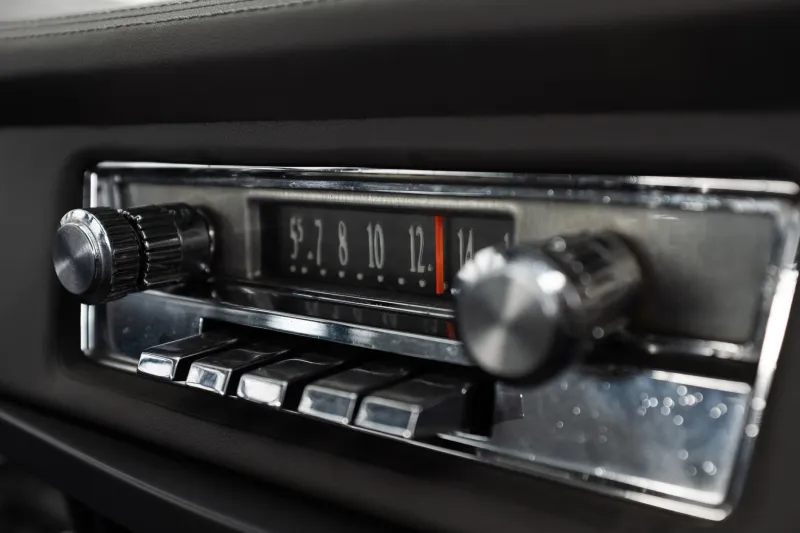
There's something deeply satisfying about pulling your classic car into the garage, flipping off the lights, and knowing it's safe for the night. It's right there. Under your roof. What could possibly go wrong?
Plenty, as it turns out.
Most homeowners have a lot of faith in their attached or detached garage as a storage solution for valuable vehicles. And honestly, that faith isn't totally misplaced — a garage is obviously better than leaving a '67 Mustang sitting in the rain. But "better than nothing" and "actually good" are two very different things. If you've got a classic car, vintage motorcycle, or any kind of collectible vehicle parked in a standard home garage, there's a real chance the environment inside that structure is working against you, quietly and consistently, every single day.
Let's talk about what's actually happening in there.
The Temperature Problem Nobody Talks About
Here's the thing about most American garages: they're not insulated worth a darn. Even if yours has some insulation in the walls, the floor is bare concrete, the door is a giant metal panel, and there's usually a gap or two somewhere letting outside air creep in. That means the temperature inside your garage tracks pretty closely with whatever's happening outside.
In Texas, that might mean 100-degree summer days followed by a cool night dropping into the 60s. In the Midwest, you're looking at 90-degree July heat and then January temps that dip well below freezing. In the South, it's not the cold that'll get you — it's the relentless heat and humidity cycling over and over again.
All that temperature fluctuation matters because your car is made of materials that expand and contract. Metal, rubber, leather, paint, plastic trim — they all respond to heat and cold. A little movement is fine. Constant, repeated cycling over months and years? That's how rubber seals crack, paint develops micro-fissures, and gaskets start to fail. You won't see it happening. You'll just notice it one day when something doesn't look or feel quite right.
Humidity Is the Quiet Killer
If temperature fluctuation is the slow burn, humidity is the thing that sneaks up and punches you in the wallet.
Concrete floors are notorious for wicking moisture up from the ground, especially in spring and fall when the ground is wet and the temperature differential between the slab and the air creates condensation. Add in the fact that most garages don't have any kind of vapor barrier or climate control, and you've got a space that can hover at 70, 80, even 90 percent relative humidity on a bad day.
For a classic car, that's genuinely bad news. Chrome pits. Bare metal under the hood starts to surface rust. Upholstery absorbs moisture and becomes a breeding ground for mildew. Wiring insulation softens and degrades. And if you've got a car with any original wood trim — like some vintage British roadsters or classic American woodies — you can add warping and rot to that list.
The worst part? You often can't tell it's happening until you pull back a piece of trim or lift the carpet and find rust blooming underneath.
Stagnant Air and What It Does Over Time
A garage that's closed up for the winter isn't just cold and damp — it's also full of the same air, sitting still, day after day. That stagnant environment accelerates a lot of the damage we've already talked about, but it also creates a few problems of its own.
Fuel systems are a big one. Gas left sitting in a tank or carburetor starts to degrade in as little as 30 days. Without proper ventilation, those fumes hang around and can gum up components they come into contact with. Battery acid vapors can corrode nearby metal. Even the off-gassing from tires and rubber components builds up in an enclosed space.
None of this is catastrophic on its own. But stack it on top of the humidity and temperature issues, and you've got a genuinely hostile environment for anything you care about preserving.
What Climate-Controlled Storage Actually Does Differently
A proper climate-controlled storage facility isn't just a garage with better insulation. It's a purpose-built environment designed to keep temperature and humidity within a specific range, consistently, year-round.
We're typically talking about temperatures held somewhere between 55 and 80 degrees Fahrenheit and relative humidity kept in the 40 to 50 percent range. That might not sound dramatic, but compared to what your home garage is doing, it's a completely different world for your vehicle.
No freeze-thaw cycles cracking rubber seals. No summer humidity cooking your leather interior. No condensation forming on bare metal overnight. The car just sits in a stable, controlled environment — which is exactly what long-term storage is supposed to provide.
A lot of quality storage facilities also offer better air circulation than a sealed garage, which addresses that stagnant air problem. Some even have dedicated vehicle storage bays with drive-in access, so you're not dealing with the logistical headache of tight spaces or shared areas.
The ROI Conversation Nobody Wants to Have
Here's where it gets real. Climate-controlled vehicle storage costs money — there's no getting around that. Depending on your area and the facility, you might be looking at anywhere from $100 to $300 or more per month for a proper climate-controlled bay.
But let's put that in context. A full chrome restoration on a vintage car can run $5,000 to $15,000. A quality re-upholstery job on a classic interior? Easily $3,000 to $8,000 or more. Rust repair and bodywork is priced by the panel, and it adds up fast. Even a set of replacement rubber seals and gaskets across an older vehicle can cost hundreds of dollars in parts alone, before you count labor.
Spend two or three years in a bad garage environment, and you might easily rack up $10,000 or more in preventable damage. At $150 a month, proper climate-controlled storage runs about $1,800 a year. The math isn't complicated.
Beyond the direct repair costs, there's also the question of what proper storage does for your vehicle's value. Collector car prices are sensitive to condition, and condition is heavily influenced by storage history. A well-documented car that's been kept in climate-controlled storage commands a meaningfully higher price than one that's been sitting in a residential garage for a decade — even if both cars look fine on the surface.
What to Look for in a Vehicle Storage Facility
Not all storage facilities are created equal, so it's worth knowing what actually matters when you're evaluating options.
Temperature and humidity monitoring is the baseline — any facility worth considering should be able to tell you what range they maintain and how they monitor it. Security matters too: gated access, cameras, and adequate lighting are the minimum you should expect for a vehicle worth keeping.
Drive-in access is a big practical consideration. You want to be able to get your car in and out without drama, especially if it's a low-clearance vehicle. And it's worth asking about pest control — rodents in a classic car interior are a nightmare scenario that proper facilities actively work to prevent.
Finally, ask about the facility's ventilation setup. Good airflow matters, and a quality operation will have thought about this.
The Bottom Line
Your garage feels like protection. And compared to parking your classic in a field somewhere, sure, it's doing something. But if you've put real money — or real heart — into a vintage vehicle, the standard home garage probably isn't holding up its end of the bargain. The environment in there is more hostile than it looks, and the damage it causes is the kind that compounds quietly until it's expensive to fix.
Climate-controlled vehicle storage isn't a luxury for people who are being overly precious about their cars. It's a practical decision that protects a real investment. And out here in big country, where temperatures swing hard and storage facilities have the space to do it right, it's an option that's more accessible than a lot of people realize.