That 'Free' Attic Space Is Costing You More Than You Think
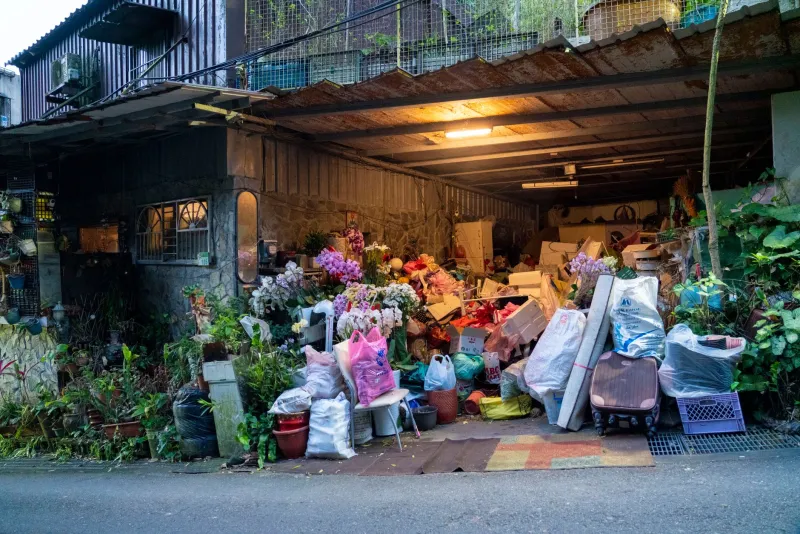
There's a pretty common assumption that goes something like this: if the stuff is already in your house, storing it doesn't cost you anything extra. The attic's just sitting there. The basement's already climate-controlled. What's the harm?
Plenty, as it turns out.
The idea that home storage is free is one of those financial blind spots that sneaks up on people over years and decades. By the time most folks do the math, they realize they've been paying a surprisingly steep price to hold onto things they rarely—or never—use. Let's walk through what that actually looks like.
Your Home's Square Footage Isn't Cheap
Start with the most obvious number: what your home costs per square foot. Whether you own or rent, every room in your house carries a cost. Homeowners can calculate this pretty easily. Take your mortgage payment, property taxes, and homeowner's insurance, then divide by your home's total square footage. For a lot of American households, that works out to somewhere between $2 and $6 per square foot per month—sometimes more in higher cost-of-living areas.
Now think about your attic or basement. A modest attic might be 400 to 600 square feet. A full basement? Easily 800 to 1,200 square feet or more. Even at the low end of that cost estimate, you could be allocating $800 to $1,500 worth of monthly housing expense to spaces that are mostly being used to store old furniture, holiday decorations, and boxes you haven't opened since the last move.
That's not free. That's just a cost you've never itemized.
Property Taxes Follow Every Square Foot
Here's one that catches people off guard. Your property tax assessment is based on the total livable or usable area of your home. That includes finished basements, attic conversions, and attached storage areas. Every square foot you're using as a dumping ground for unused belongings is still contributing to your tax bill.
In states like Texas, Illinois, or New Jersey—where property taxes run particularly high—this gets even more significant. A 500-square-foot finished basement in a high-tax county could represent several hundred dollars in annual property tax expense all on its own. That's real money being paid to a government entity so you can store a treadmill you haven't used since 2019.
Climate Control Isn't Free Either
If your attic is uninsulated and unfinished, you might think it's off the grid for heating and cooling purposes. But that's rarely the whole story. Heat transfer is a real thing. Attics that bake in the summer or freeze in the winter affect the temperature of the rooms directly below them, which means your HVAC system works harder to compensate. The Department of Energy estimates that a poorly insulated attic can account for 25% or more of a home's total energy loss.
And if you're using a finished basement or spare room for storage, you're absolutely climate-controlling that space. You're heating it in January and cooling it in July, whether or not anyone ever sets foot in it.
Add that up over 12 months and you've got a non-trivial chunk of your utility bill going toward keeping boxes of stuff comfortable.
Insurance Premiums Reflect What You Own
Homeowner's insurance is another area where stored possessions carry a hidden price. Your premiums are partly calculated based on the total value of the contents inside your home. The more you keep, the more coverage you need—and the more you pay.
Beyond that, certain items stored improperly can actually create liability or coverage complications. Flammable materials, old electronics, and certain chemicals stored in attics or basements can affect your coverage terms. Some insurers have specific exclusions for items stored in non-climate-controlled spaces, which means you might be paying for coverage that wouldn't actually protect your stuff in the event of a claim.
The Opportunity Cost Nobody Talks About
This is the big one. Opportunity cost is the value of what you could do with a space versus what you're actually doing with it.
That basement full of boxes? It could be a home office that saves you a coworking space membership. A guest room that lets family visit without booking a hotel. A workout space, a hobby room, a rental unit that generates actual income. In some markets, a finished basement can add meaningful resale value to a home—but only if it looks like livable space, not a storage unit.
The opportunity cost of keeping all that stuff isn't just abstract. It's measurable. And for a lot of families, it's in the thousands of dollars per year.
What Dedicated Storage Actually Costs by Comparison
Here's where the math gets interesting. A quality off-site storage unit—even a generously sized one—typically runs anywhere from $60 to $200 per month depending on size and location. Rural and suburban facilities like ours tend to come in at the lower end of that range compared to urban options.
For the cost of one or two tanks of gas a month, you can move everything out of your attic, reclaim that space, and actually use your home the way it was meant to be used. When you compare that monthly fee against the combined costs of property taxes, climate control, insurance, and lost opportunity, dedicated storage often comes out ahead—sometimes significantly.
Making the Switch
The decision to move stuff out of your home and into a dedicated storage facility isn't just about decluttering. It's a financial decision, and it's one that deserves the same kind of clear-eyed analysis you'd apply to any other household expense.
Start by walking through your attic or basement with fresh eyes. Ask yourself: what's actually in here, what does it cost me to keep it here, and what could this space be worth to me if it were empty?
For most people, that exercise is pretty eye-opening. The stuff you thought was free to store? It's been on the payroll this whole time.
At Big Country Parking & Storage, we work with homeowners all across our area who've done exactly this kind of thinking and decided it was time to move things out and get their space back. If you're curious about what a unit would run you, reach out or stop by. Sometimes the smartest financial move is also the one that makes your home feel like home again.