One Accident Away from Losing Everything: The Insurance Gap Nobody Warns You About
The Assumption That Could Cost You Everything
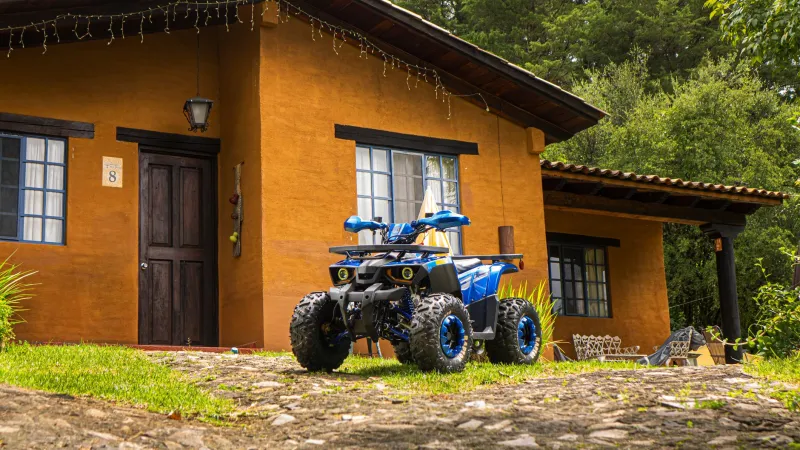
You've worked hard for what you have. The boat sitting beside the barn, the ATV parked near the fence, the motorcycle tucked under a tarp in the side yard — these aren't just toys. They're investments, hobbies, pieces of your lifestyle. And like most people, you probably figure your homeowner's insurance has you covered if something goes sideways.
Here's the uncomfortable truth: it probably doesn't. At least not in the way you think.
The gap between what homeowners believe their insurance covers and what it actually protects is one of the most dangerous financial blind spots in rural and suburban America. And it doesn't take a catastrophic event to expose it. Sometimes all it takes is a teenager, a borrowed four-wheeler, and a broken arm.
What Your Homeowner's Policy Actually Says
Standard homeowner's insurance is designed to protect your home and the stuff inside it. It extends some liability coverage to your property, but that coverage has serious limits when it comes to motorized vehicles — especially ones that aren't registered or actively insured on their own policy.
Most policies explicitly exclude liability coverage for motorized vehicles used off public roads. That means if your ATV is involved in an accident on your property — even if you weren't driving it — you could be on the hook for every dollar of the resulting medical bills, legal fees, and damages. The same goes for boats, motorcycles, dirt bikes, and personal watercraft stored at your residence.
Some policies offer limited coverage for certain recreational vehicles, but the thresholds are often shockingly low. A $100,000 liability limit sounds like a lot until you're facing a serious injury lawsuit in today's legal environment, where seven-figure verdicts aren't uncommon.
Real Scenarios, Real Consequences
Let's put some faces on this problem.
Scenario one: Your neighbor's kid has been eyeing your ATV all summer. One afternoon while you're not home, he hops on it and rolls it into a ditch, breaking his collarbone and wrist. His parents sue. Your homeowner's insurer reviews the claim and denies it — motorized off-road vehicle, excluded under your policy. You're now personally liable.
Scenario two: You store your boat at the back of your property. A windstorm rolls through, the boat breaks loose, and it crashes into your neighbor's fence and car. Your homeowner's policy covers some of the property damage, but caps out well below the total cost. The neighbor files suit for the remainder. You're paying the difference out of pocket.
Scenario three: Your motorcycle, which you haven't registered or insured in two years because you rarely ride it, gets stolen. Or worse — someone takes it for a joyride and injures a pedestrian. Without an active motorcycle insurance policy, you could face liability for that accident.
None of these scenarios are far-fetched. They happen to regular people across the country every single year.
Why People Fall Into This Trap
It's not that homeowners are careless — it's that the insurance system is genuinely confusing. Policies are written in dense legal language, and most people only skim the details until there's a problem. Agents don't always volunteer information about coverage gaps unless you ask the right questions.
There's also a financial temptation involved. Dropping insurance on a vehicle you're not actively using feels like a smart way to save money. And for a while, it is — right up until it isn't.
Seasonal vehicles are especially vulnerable to this pattern. You insure the boat while you're actively taking it out on the water, then let the policy lapse over winter when it's sitting idle. But idle doesn't mean risk-free. Theft, weather damage, and third-party accidents don't take a season off.
How Dedicated Storage Changes the Equation
This is where a professional storage facility does something your driveway simply can't: it removes your property from your residential liability zone.
When your boat, ATV, or motorcycle is stored at a dedicated facility like Big Country Parking & Storage, it's no longer sitting on your property creating exposure. The facility carries its own insurance coverage for the premises. Access is controlled. There are no neighborhood kids wandering in on a dare. There's no windstorm sending your boat into a neighbor's fence because the facility is designed to secure vehicles properly.
You still need your own vehicle-specific insurance — and you absolutely should have it — but the liability landscape changes dramatically when you're not storing that vehicle on residential property. You eliminate the "it happened on my land" equation entirely.
Beyond liability, a quality storage facility also protects the vehicle itself. Climate-appropriate storage, covered spaces, and secure fencing mean your investment is safer from theft, vandalism, and weather damage. That's protection your side yard simply cannot offer.
Before You Assume You're Covered, Ask These Questions
If you're currently storing any motorized recreational vehicle on your property, it's worth having a real conversation with your insurance agent — not a quick phone call, but a sit-down review of your actual policy language. Ask specifically:
- Does my homeowner's policy cover liability for motorized off-road vehicles on my property?
- What is the coverage limit, and does it include legal defense costs?
- Am I covered if someone other than a household member is injured using one of my vehicles?
- What happens if a stored vehicle causes property damage to a neighbor?
The answers might surprise you. And if your agent hesitates or gives you vague reassurances, that's a sign to dig deeper.
The Math Isn't Hard
Monthly storage fees at a facility like Big Country Parking & Storage are a fraction of what a single lawsuit could cost you. We're talking about the difference between a manageable monthly expense and a financial event that could wipe out savings, equity, and years of hard work.
People spend a lot of time thinking about how to protect their vehicles from rust, theft, and weather. The liability risk is just as real — and in many ways, it's more dangerous because it's invisible until something goes wrong.
Don't let the assumption of coverage be the most expensive mistake you make this year. Know what you actually have, fill the gaps, and consider whether keeping that boat, ATV, or motorcycle at home is really worth the exposure.
Sometimes the smartest thing you can do with something you love is give it a safer place to live.