What 'Just in Case' Is Actually Costing You: The Real Financial Hit of Keeping Too Much at Home

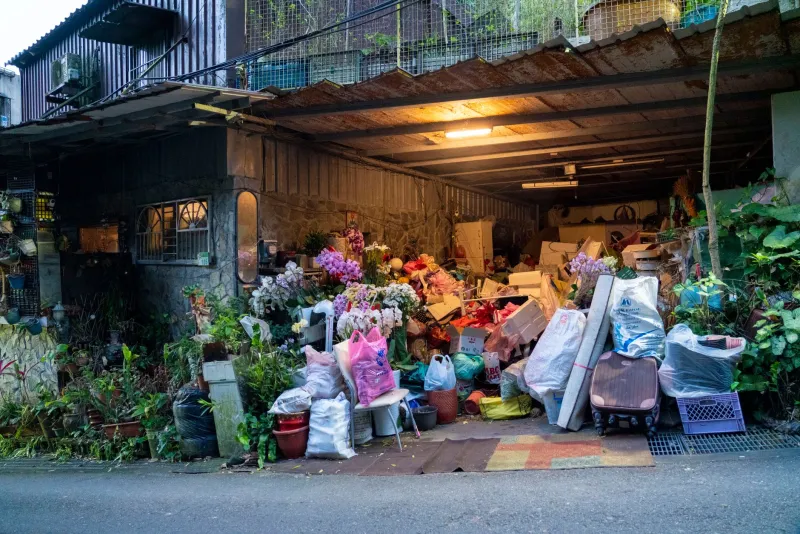
Photo: cluttered spare bedroom with boxes and storage items, via partyxparty.com
The Stuff You're Keeping Is Keeping You Back
Most of us have a room — or at least a corner — that's become a graveyard for things we can't quite bring ourselves to get rid of. The old treadmill. Three sets of holiday dishes. A box of cables for devices you haven't owned since 2014. The logic is always the same: what if I need it someday?
Here's the uncomfortable truth: that 'just in case' mindset has a price tag, and most people have never bothered to calculate it. When you start adding up the real costs — financial, emotional, and practical — the picture gets a lot less comfortable.
Your Square Footage Isn't Free
Let's start with the most obvious number: what your home's square footage actually costs you.
The median home price in the US hovers around $400,000 depending on where you live. If your home is 2,000 square feet, that's roughly $200 per square foot in value. A single storage room — say, a 12x12 space — represents about $28,000 in home equity sitting there, being used as a dumping ground for stuff you haven't touched in years.
That's not just dead space. It's dead money. If that room were usable — a proper guest bedroom, a home office you could actually rent out, a space that added functional value — it could meaningfully impact your home's resale price. Buyers pay attention to livable square footage. A cluttered back room full of 'just in case' boxes doesn't count.
And if you're paying property taxes on that home? Part of every tax bill you write is subsidizing the storage of things you probably don't need.
Insurance Premiums You Might Not Be Thinking About
Here's one that catches people off guard: homeowner's insurance.
The more stuff you have inside your home, the more coverage you technically need for your personal property. Most standard policies include personal property coverage as a percentage of your dwelling coverage — typically 50 to 70 percent. If you're stockpiling gear, collectibles, furniture, and equipment across multiple rooms, you may be underinsured without knowing it — or you've bumped your coverage up to account for all of it, which means higher premiums.
Either way, the accumulation of stuff has a cost that shows up on your insurance statement whether you notice it or not.
The Mental Load Is Real (And Expensive)
This part is harder to put a dollar figure on, but it's worth talking about.
Studies on clutter and stress consistently show that living in an environment crowded with excess belongings raises cortisol levels — that's the stress hormone — and makes it harder to relax at home. A cluttered space signals to your brain that there's unfinished business, that decisions are being deferred, that things are out of control.
That mental load costs you in subtle ways. Productivity drops when your workspace is crowded. Sleep quality can suffer when your bedroom is doing double duty as overflow storage. Decision fatigue from navigating a cluttered home adds up across every single day.
And then there's the time cost. How many hours have you spent moving boxes around to find something, reorganizing a closet that filled back up in two weeks, or just working around a room you've mentally written off? Time is money, and clutter eats a surprising amount of it.
The Opportunity Cost Nobody Talks About
Opportunity cost is an economics concept that basically means: every choice you make has a cost in the form of what you didn't choose.
When you fill a spare bedroom with storage, you're choosing not to rent it out (average room rental rates in many US markets run $600–$1,200/month). You're choosing not to use it as a productive home office. You're choosing not to stage it to boost your home's appeal to future buyers.
When you pack a garage with items you haven't touched in three years, you're choosing to park your vehicles outside — which means exposure to weather, UV damage, and in some neighborhoods, higher vehicle insurance rates for cars not stored in a secured structure.
The 'free' storage you're getting at home isn't free at all. It has a real opportunity cost that compounds over time.
So What's the Alternative?
This is where a lot of people get stuck. They don't want to throw things away — and honestly, that's fair. Some items are genuinely worth keeping. Seasonal equipment, hobby gear, family heirlooms, a boat you use every summer, tools for projects that come around every few years — these things have legitimate value.
The smarter move isn't to purge everything. It's to be strategic about where you keep things.
Off-site storage — whether that's a rented unit, a covered parking spot for your trailer, or a secure vehicle storage bay — lets you hold onto the things that matter without letting them colonize your living space. You get the peace of mind of knowing your stuff is safe and accessible, without paying for it in home equity, insurance, or mental bandwidth.
The monthly cost of a storage unit is a known, fixed, and often surprisingly affordable expense. Compare that to the diffuse, invisible costs of keeping everything at home — the square footage value, the insurance creep, the opportunity costs — and the math starts to look very different.
A Simple Way to Think About It
Here's a quick mental exercise. Walk through your home and identify every item you haven't used in the past 12 months that's occupying meaningful space. For each one, ask yourself: if I needed this, could I get it within 24 hours from an off-site storage location?
For most people, the answer is yes. A 20-minute drive to a storage facility is a reasonable trade-off for reclaiming a room, clearing a garage, or finally being able to breathe in your own home.
The 'just in case' instinct comes from a good place — nobody wants to need something and not have it. But there's a smarter version of that instinct: keeping things accessible rather than keeping them underfoot.
The Bottom Line
Keeping everything at home because you might need it someday isn't a neutral decision. It has measurable costs — in property value, insurance, lost income potential, and daily stress — that most people have never stopped to tally.
At Big Country Parking & Storage, we talk to people all the time who made the switch and couldn't believe they waited so long. Freeing up space at home isn't about getting rid of what you love. It's about finding a smarter place to keep it — one that doesn't cost you every single day in ways you can't see.
If you're ready to stop paying the hidden tax on all that 'just in case' clutter, we're here to help you figure out what that looks like.