Why Your Home Address Is the Most Expensive Line Item in Your Service Business

Every service contractor has a version of the same story. You started the business lean — truck in the driveway, equipment in the garage, scheduling out of the kitchen. It made sense at the time. Overhead was low, the commute was nonexistent, and the whole operation fit neatly into the margins of your personal life.
But somewhere along the way, the business grew past the space. The garage got crowded. The driveway started looking like a staging area. Neighbors started noticing. And the practical workarounds that seemed clever when you were just getting started started feeling like liabilities — because some of them actually are.
If you're running an HVAC, plumbing, landscaping, electrical, or general contracting operation out of your residential property, here's a clear-eyed look at what that's actually costing you.
The Zoning Problem You're Probably Ignoring
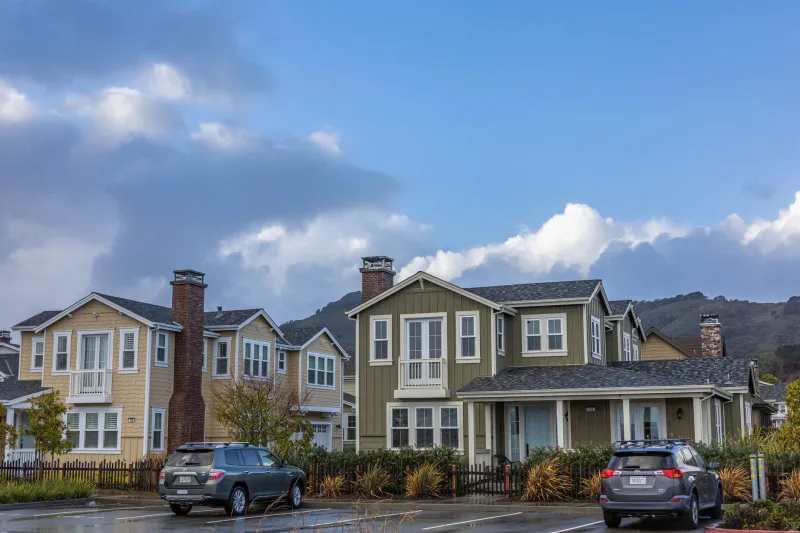
Most residential zones in the US permit some degree of home-based business activity. What they typically don't permit is the commercial use of residential property — and the line between those two things gets blurry fast when you're parking three work trucks in the driveway, running employees through the property, and storing equipment that would be at home in a commercial yard.
Zoning violations don't always come with a warning. Sometimes the first notice is a complaint from a neighbor, and sometimes that complaint triggers an inspection that uncovers more than the original issue. Fines vary by municipality, but the more significant cost is the disruption: you may be required to relocate operations on a timeline that doesn't work in your favor, potentially mid-project or mid-season.
Beyond the formal zoning risk, there's the practical reality that many municipalities are getting more aggressive about residential commercial activity as neighborhoods push back. What your county allowed five years ago may not be what it allows today.
Liability Exposure That Your Personal Policy Doesn't Cover
This is the one that tends to get people's attention. When a business operates out of a residential address, the liability lines get complicated in a hurry.
If a client comes to your property and gets hurt, your homeowner's policy may not cover it — because the visit was business-related. If an employee is on your property and has an incident, the coverage question gets even messier. And if commercial equipment on your property causes damage — a fuel spill, a fire, a structural issue from weight load — you may be looking at a gap between what your personal insurance covers and what the actual damage costs.
Most small contractors carry commercial general liability insurance, but that policy is designed around business operations, not residential property. The intersection of the two creates coverage gaps that are easy to miss until something goes wrong.
What Clients and Prospects Are Actually Seeing
This one is harder to quantify, but it's real. In service industries, trust is everything. Clients are inviting you into their homes, their businesses, and their infrastructure. The way you present your operation signals something about how you run it.
A service business that operates from a clearly residential address — where you can see the personal vehicles, the kids' stuff, the general texture of someone's home life — reads differently than one with a proper operational footprint. It's not a judgment call; it's a perception reality. Some clients won't care. Others, particularly commercial clients or higher-end residential work, will factor it into their decision.
Your business address, where you operate from, and how your equipment and vehicles are staged all communicate something about the professionalism of the operation. A cluttered residential driveway communicates something. A clean, organized storage setup communicates something else.
The Operational Drag You've Stopped Noticing
When your equipment and vehicles are stored at home, your workday starts and ends there. That sounds convenient until you look at what it actually means in practice.
You're loading and unloading in a space that wasn't designed for it. You're doing vehicle maintenance in a driveway. You're organizing inventory in a garage that also has to function as a garage. Every operational task takes longer than it would in a space purpose-built for the work.
For a solo operator, that inefficiency might add up to an hour a day. For a small crew, it multiplies. And inefficiency in a service business translates directly to either fewer jobs completed, more hours worked for the same revenue, or both.
A dedicated storage facility doesn't just move your stuff off the property — it gives you a staging environment that's actually functional. Equipment is organized for access, not crammed in around personal items. Vehicles can be properly maintained without working around a residential footprint. Your workday starts and ends more cleanly.
The Neighbor Problem
Let's be direct about this one: your neighbors didn't sign up to live next to a contractor's yard. Even if they like you personally, the commercial activity that comes with a working service business — early morning starts, engine noise, equipment loading, client visits, occasional deliveries — creates friction that accumulates over time.
Neighbor complaints are the most common trigger for zoning enforcement action. They're also the most common source of the kind of low-grade neighborhood tension that makes your home feel less like a home. That's a quality-of-life cost that doesn't show up in any financial analysis, but it's real.
Storage as Business Infrastructure
The framing that tends to shift things for contractors is this: off-site storage isn't an overhead cost, it's a business infrastructure investment. You wouldn't hesitate to pay for a business phone line or commercial insurance because those are clearly business expenses. Storage that protects your equipment, reduces your liability exposure, keeps you in compliance with zoning, and improves your operational efficiency is the same category of investment.
The monthly cost of a properly sized storage unit for a service business is typically a fraction of what a single zoning fine, liability gap, or equipment loss event would cost. It's also deductible as a business expense — which changes the net cost calculation significantly.
At Big Country Parking & Storage, we work with a lot of contractors who made this move and describe it the same way: it was the most straightforward business decision they made all year. If your home address is currently doing double duty as your business base, it might be time to separate those two things — for the sake of both.