Your Driveway Could Be a Lawsuit Waiting to Happen
That Friendly Wave Could Cost You Thousands
It happens all the time. Your brother-in-law pulls up for Thanksgiving, your neighbor parks their truck on your gravel pad while their own driveway gets repaved, or a delivery driver cuts across your property. These feel like non-events — just people being people. Nobody's signing anything. Nobody's thinking about liability.
Until someone gets hurt.
The reality is that your property — including your driveway, parking pad, and any area where vehicles come and go — can expose you to serious legal and financial risk the moment another person sets foot on it. And in a lot of cases, your standard homeowner's insurance policy won't have your back the way you think it will.
What "Premises Liability" Actually Means for You
Premises liability is the legal concept that holds property owners responsible for injuries that occur on their land. It doesn't matter if you intended any harm. If a guest trips over a cracked section of your driveway, slips on an icy patch near your parking area, or gets hurt climbing out of their car on your property, you could be held financially responsible.
Courts across the country have consistently ruled that property owners owe a reasonable duty of care to visitors — and that includes keeping parking areas safe. That pothole you've been meaning to fill? The oil slick that forms every time it rains? The gravel that shifts under foot? All of it counts.
And here's the part that catches most homeowners off guard: "visitors" in the legal sense includes just about anyone you've given permission to be there. Friends, family, contractors, delivery workers — they all potentially qualify.
The Homeowner's Insurance Gap Nobody Talks About
Most homeowner's policies include some level of liability coverage. But the details matter enormously, and most people never read the fine print until they're already in trouble.
First, coverage limits are often lower than people assume. A standard policy might carry $100,000 in liability coverage — which sounds like a lot until you're facing a personal injury lawsuit with medical bills, lost wages, and legal fees piling up. Serious injuries can easily exceed that.
Second, many policies have exclusions or reduced coverage for incidents that involve vehicles on your property. If a guest's car gets damaged while parked on your land — say, a tree branch falls on it, or another vehicle clips it during a tight turnaround — your homeowner's policy may not cover the damage to their vehicle at all. That dispute lands squarely between you and your guest.
Third, if the injured party decides to sue, you could be looking at legal defense costs that start eating into your coverage before any settlement is even reached.
Real Scenarios, Real Consequences
Let's put some faces on this.
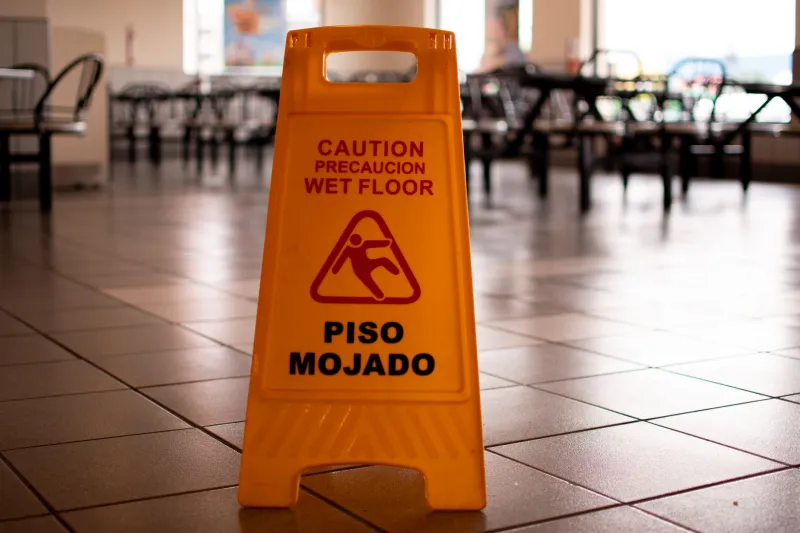
Imagine a family gathering where an elderly relative slips on a wet patch near the edge of your parking area and breaks a hip. Hip replacements and rehab can run well into six figures. Your homeowner's policy covers some of it — but not all. Suddenly you're negotiating with your own family member's medical team and possibly their attorney.
Or consider a contractor you hired to work on your property. They're parked in your driveway, trip over an uneven section of pavement while unloading equipment, and injure their back. Depending on their employment status and your state's laws, your liability exposure could be substantial — especially if they don't carry adequate workers' comp coverage themselves.
Then there's the simpler but equally frustrating scenario: a guest parks their newer SUV on your gravel lot, and it rolls slightly, tapping another vehicle. Now there's a damage dispute, and since nothing was formal, there's no clear framework for who pays what.
None of these are rare edge cases. They happen in driveways and parking areas across the country every single day.
Why Professional Storage and Parking Facilities Carry a Different Kind of Protection
This is where the comparison gets important. When you park or store a vehicle at a licensed, professional facility, the liability equation changes significantly.
Reputable parking and storage operations carry their own commercial liability insurance. They're required to maintain safe conditions on their property. There are documented procedures for incidents, clear terms in rental agreements, and defined responsibilities on both sides. If something goes wrong, there's an established framework for handling it — not an awkward conversation at Christmas dinner.
For the vehicle owner, this also means your vehicle is typically stored or parked in a controlled environment with better oversight than most residential driveways. Lighting, security cameras, access controls — these aren't just conveniences. They're also documentation tools that protect everyone involved if a dispute arises.
For the homeowner who might otherwise be offering up their property as an informal parking solution, moving that arrangement to a professional facility removes the liability from their plate entirely.
The Informal Arrangement Problem
A lot of the risk we're talking about comes from the informal nature of these arrangements. When nothing is written down, nothing is agreed to, and no one has thought through the what-ifs, everyone is flying blind.
That's fine when everything goes smoothly. But "everything going smoothly" is not a legal strategy.
If you're currently letting someone park on your property on a regular basis — a family member storing a boat, a friend parking an extra truck, a neighbor using your lot while they're between storage solutions — it's worth having a real conversation about the risks. At minimum, talk to your insurance agent about whether your current policy actually covers these scenarios. The answer might surprise you.
Protecting Yourself Starts With Asking Better Questions
You don't have to be paranoid about your own property. But you do need to be realistic.
Ask yourself: Is my parking area in genuinely good condition? Do I have adequate lighting? Would my insurance actually cover an injury here? Do I have any documentation of who parks on my property and under what terms?
If the answers make you uncomfortable, that discomfort is useful information.
Professional parking and storage facilities exist precisely because these questions have clear, managed answers. The peace of mind that comes with a proper facility isn't just about security cameras and covered spaces — it's about knowing that the liability piece has been handled by people whose business it is to handle it.
Your driveway is a convenience. It's also, potentially, a risk you've never fully accounted for. It might be time to think about that.