The Favor That Backfired: Why Casual Driveway Deals With Neighbors Rarely End Well
The Favor That Backfired: Why Casual Driveway Deal With Neighbors Rarely End Well
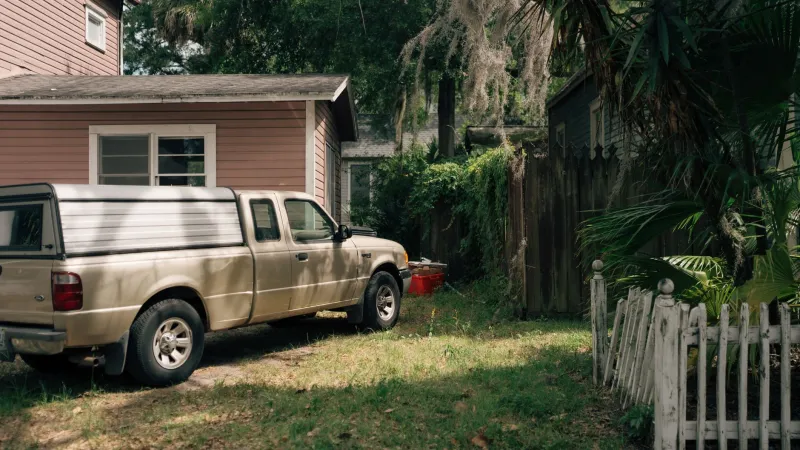
It's the kind of thing that happens all the time in small towns and suburban neighborhoods across America. You've got a truck that doesn't fit in your garage, your neighbor has a wide concrete pad sitting mostly empty, and the two of you have been swapping casseroles and borrowing tools for years. So when they say, "Just park it over here, no big deal," it feels like the most natural thing in the world.
Except it kind of is a big deal — and not in a good way.
Those casual, nothing-in-writing arrangements might feel neighborly, but they carry real risks that most people never think about until something goes wrong. And by then, the damage — financial, legal, and personal — can be surprisingly hard to undo.
When "No Big Deal" Meets a Real-World Problem
Let's say your truck is parked in your neighbor's driveway and a delivery driver clips it backing out of the cul-de-sac. Or maybe your neighbor's kid is shooting hoops, loses control of the ball, and it rolls under your vehicle right as they're pulling out. Or — and this one happens more than people realize — your parked vehicle somehow rolls and damages your neighbor's fence, garage door, or another car.
Now what?
The answer isn't as simple as "the insurance company handles it." Because here's the thing: your neighbor's homeowner's policy almost certainly wasn't written with your vehicle in mind. Most standard homeowner's policies cover the property and the people who live there. A neighbor's truck parked on the premises as an informal favor? That's typically a gray area at best, and a flat-out exclusion at worst.
Your own auto insurance might step in — or it might not, depending on the specific circumstances and how your policy is written. If there's any dispute about fault or coverage, you're suddenly in the middle of a claim process that could take months and cost you out of pocket in ways you didn't anticipate.
The Liability Question Nobody Asks Up Front
Here's something worth thinking about: when your vehicle is sitting on someone else's property, who's responsible if something happens?
If a person trips over your trailer hitch in your neighbor's driveway and gets hurt, the liability picture gets complicated fast. Your neighbor could potentially face a premises liability claim because the injury happened on their property. You could face a claim because it was your equipment. And without any written agreement spelling out who's responsible for what, neither of you has much protection.
In some states, the mere act of regularly allowing someone to use your property can establish what's called a prescriptive easement or implied license — legal concepts that can affect your property rights in ways that are genuinely difficult to unwind. Most people have never heard these terms, and that's exactly the problem.
The Friendship Factor
Beyond the legal and insurance angles, there's a softer cost that's just as real: the relationship itself.
Maybe everything goes fine for six months. Then your neighbor decides they want to use that space for something else, or they're selling the house and the new owners aren't exactly thrilled about the arrangement. Or maybe there's a minor fender scrape and suddenly neither of you is sure whose fault it was or who should pay.
These situations create exactly the kind of low-grade tension that turns good neighbors into distant ones. People don't like confrontation, so instead of addressing it directly, they let resentment build. The friendship that made the arrangement feel safe in the first place becomes the casualty of the arrangement itself.
It's a pattern that plays out constantly, and it almost always starts with someone thinking, "We're close enough that it'll never be a problem."
What a Proper Agreement Would Actually Require
If you wanted to make an informal parking arrangement genuinely safe, you'd need quite a bit more than a handshake. You'd want a written agreement that covers:
- Duration and termination terms — how long is this arrangement, and how does either party end it?
- Liability allocation — who's responsible if the vehicle is damaged, or if someone is injured?
- Insurance requirements — does the vehicle owner need to carry specific coverage? Does the property owner need a rider on their homeowner's policy?
- Compensation — even if it's just a nominal amount, exchanging something of value helps establish the arrangement as a legitimate agreement rather than a casual favor
- Property use limits — can the vehicle be moved if needed? Are there restrictions on what can be stored?
Getting all of that in writing, and ideally reviewed by an attorney, transforms a favor into something that actually protects both parties. But let's be honest — almost nobody does that. And that's exactly why these arrangements tend to go sideways.
The Smarter Move for Your Vehicle
If you've got a truck, trailer, RV, boat, or extra car that needs a home, a dedicated storage facility isn't just a convenience — it's a genuine risk management decision.
At a place like Big Country Parking & Storage, your vehicle has a designated space with clearly defined terms, real security infrastructure, and a formal agreement that spells out exactly what's covered. There's no ambiguity about liability, no awkward conversations with the neighbors, and no risk of the arrangement evaporating because someone decided they want their driveway back.
The monthly cost of a proper storage or parking space is often surprisingly reasonable when you stack it against the potential downside of an informal deal gone wrong. One insurance dispute, one small claims court filing, or one strained friendship that turns into a years-long cold war — any of those outcomes is going to cost you far more than a few months of storage fees.
Before You Pull Into That Driveway
If you're currently relying on a neighbor's property to park or store a vehicle, it's worth taking a hard look at what you're actually risking. Not because your neighbor isn't a good person or because something is guaranteed to go wrong — but because the downside scenarios are real, they're more common than most people think, and they're almost entirely avoidable.
The people who end up in the most trouble are usually the ones who thought they had nothing to worry about. A simple, professional storage arrangement removes that uncertainty entirely, and lets you keep the neighborly relationship exactly the way it should be: friendly, easy, and uncomplicated.
That's a trade worth making.