When the Property Line Becomes a Battle Line: What That 'Extra' Parking Spot Could Really Cost You
The Spot That Seemed Like a No-Brainer
You've got a little extra room along the side of your property. Maybe it's a worn dirt path between your fence and the road. Maybe it's a patch of gravel behind the barn that's technically on your side of things — or at least you think it is. So you park the boat there. Or the work trailer. Or that second pickup you only need in summer.
No big deal, right?
Until it is.
Property boundary disputes are one of the most underestimated legal headaches facing American homeowners, and informal parking arrangements are one of the most common triggers. What starts as a casual decision about where to put a vehicle can snowball into surveying costs, attorney fees, and neighbor relationships that never fully recover.
The Survey Said… Something Different
Here's the thing about property lines: most people have never actually had their land professionally surveyed. They're working off a mental map built from old fences, a quick glance at the deed, or what the previous owner told them at closing.
That's a shaky foundation for a parking decision.
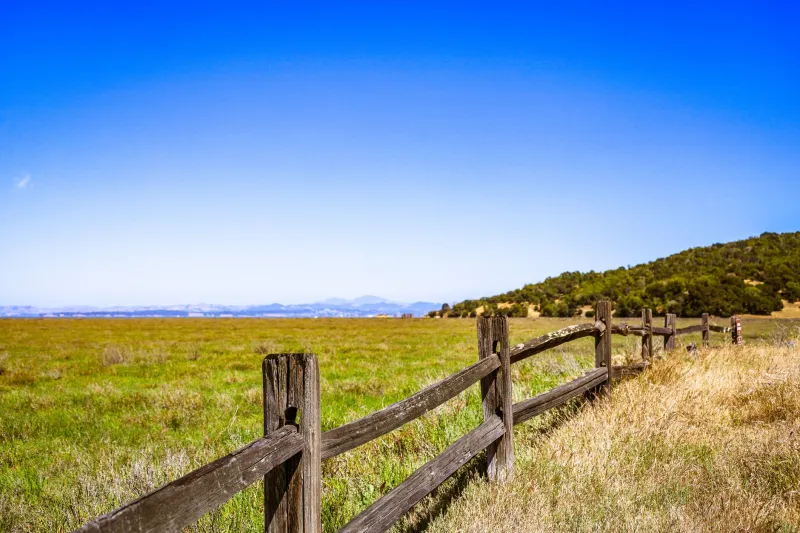
In rural and suburban areas especially, old fences drift over time. Erosion, tree roots, and decades of casual maintenance can shift a fence line by several feet without anyone noticing — until someone notices. When a neighbor sells their property, a new owner often orders a survey. When a property gets refinanced or subdivided, the lender might require one. And when that survey comes back, it sometimes shows that your "extra" parking space has been sitting two or three feet into someone else's land for years.
At that point, you've got a potential encroachment claim on your hands.
What an Encroachment Claim Actually Looks Like
Encroachment happens when a structure, vehicle, or improvement sits on land that legally belongs to someone else. It doesn't have to be a building — a parked trailer counts. So does a gravel pad you laid down for convenience.
Once a neighbor raises an encroachment issue, the situation can move fast. You may be asked to remove whatever's on the disputed strip. You might need to hire your own surveyor to push back on their findings. If the two surveys disagree, that's when attorneys get involved — and attorney fees in property disputes can run thousands of dollars before anyone even files a court document.
Worse, if you've been using that strip of land for long enough, your neighbor might argue the opposite: that you've established a prescriptive easement, meaning you've been acting like you have the right to use it. That sounds like it might work in your favor, but prescriptive easement claims are messy, fact-specific, and vary a lot by state. They're not something you want to navigate without legal help.
Either way, you're spending money and time on a situation that started with a parking decision.
The Neighbor Factor
Even when the property line is clear, informal parking near boundaries creates friction. People have strong feelings about their land, and what you see as harmless — a boat parked along your fence line — your neighbor might see as an eyesore, a drainage issue, or a safety concern.
Neighbor disputes over parking and storage are remarkably common in rural communities. HOA rules, local ordinances, and simple personality conflicts can all come into play. And unlike a dispute with a stranger, a conflict with a neighbor is one you have to live next to. That's a long-term quality-of-life problem that no legal resolution fully fixes.
Some homeowners try to formalize things — getting a handshake agreement or a written note from a neighbor giving them permission to use a strip of land. But informal agreements like that rarely hold up the way people expect them to. They're not recorded with the county. They don't bind future owners. And when the neighbor who gave you permission sells the house, the new owner owes you nothing.
Easements: The Complication Nobody Reads in the Deed
Speaking of things that don't get read carefully — when's the last time you reviewed your deed for easements?
Easements grant specific rights to use portions of your property to third parties — utility companies, neighboring landowners, municipalities. A utility easement running along your back fence line, for example, might explicitly prohibit parking or storage in that corridor. If you've got equipment sitting in an easement area, you could be ordered to move it with little notice.
Drainage easements are another one to watch for, particularly in rural areas where water flow across properties is a genuine concern. Parking a heavy vehicle on a drainage easement can cause real damage to the land and create liability for you if it affects neighboring properties.
The point is: that "extra" space might have legal strings attached that you've never thought about.
The Cleaner Alternative
None of this is meant to make you feel like your property is a minefield. Most of the time, most of the things most people park at home are just fine. But when you're storing something significant — a second vehicle, a work trailer, an RV, a boat — the casual approach carries real risk.
Professional off-site storage removes all of these complications from the equation. When you rent a designated storage or parking space at a facility like Big Country Parking & Storage, the boundaries are defined, documented, and not subject to dispute. There's no neighbor to object, no survey to worry about, no easement running through your rental space.
You know exactly what you're paying, exactly where your vehicle sits, and exactly what your rights are. That clarity has real value — especially compared to the cost of a surveying battle or a property dispute that drags on for months.
What You're Really Protecting
At the end of the day, parking decisions are property decisions. And property decisions have consequences that ripple out further than most people expect when they're just trying to find a spot for the trailer.
If you've got vehicles, equipment, or recreational gear that needs a home, it's worth thinking about where that home actually is — and whether the ground it's sitting on is as straightforward as it looks. Because in our experience, the spots that seem free rarely end up that way.
Reaching out to explore off-site storage options before a problem develops is a whole lot easier than dealing with one after it does.