Room to Obsess: Why Serious Collectors Are Taking Their Passion Off the Property

There's a particular kind of tension that lives in a collector's household. On one side: the project car that needs another weekend, the vintage motorcycle that's halfway through a restoration, the row of classic equipment that's been accumulating for fifteen years. On the other side: a spouse who'd like to park in the garage again, kids who need somewhere to store bikes, and a general domestic peace that keeps getting disrupted by the hobby.
Most collectors manage this tension through a combination of negotiation, creative spatial arrangement, and the occasional guilty purchase. But a growing number of serious enthusiasts are finding a cleaner solution — one that doesn't require a bigger house, a more understanding family, or a painful decision about what to sell.
The Garage Was Never Really the Answer
For most collectors, the home garage was always a compromise. It's where the hobby happened because it was available, not because it was ideal. You worked around the lawn mower, the holiday decorations, the stuff that didn't have anywhere else to go. Your tools competed for space with everyone else's tools. And every project got interrupted by the practical reality that other people needed to use that space for other things.
That compromise works fine when the hobby is casual. But as collections grow — and they always grow — the friction increases. You can't properly store three vintage motorcycles and a project car in a two-car garage without sacrificing something. Either the collection suffers, or the household does.
What Intentional Separation Actually Does
Talk to collectors who've moved their pieces to a dedicated off-site facility and you'll hear a consistent theme: the hobby got better. Not just logistically better, but experientially better.
When you have a space that's specifically for the collection — where everything has a place, where you can lay out tools without someone needing the table for dinner prep, where the project car doesn't have to be moved every time someone needs something from a shelf — the work itself becomes more focused and more satisfying.
There's a psychological dimension here that's easy to underestimate. When your hobby is tangled up with your living space, it never fully gets to be either thing. The garage feels like a hobby space when the family wants to use it and feels like a storage area when you want to work. Dedicated storage resolves that ambiguity completely.
The Preservation Argument
Beyond the quality-of-life benefits, there's a serious financial case for getting valuable collectibles out of a typical residential garage.
Most home garages are not climate-stable environments. They heat up dramatically in summer, drop below freezing in winter in most of the US, and cycle through humidity swings that are genuinely damaging to paint, upholstery, rubber, chrome, and mechanical components. For a daily driver, that's unfortunate. For a 1968 muscle car or a restored vintage motorcycle, it's a preservation problem.
Collectors who've invested real money — and real time — into their pieces understand that storage conditions directly affect value. A vehicle that's been properly stored holds its restoration quality longer, shows better when it's time to display or sell, and requires less corrective work over time. The cost of quality storage is a fraction of what it costs to redo paint, reupholster an interior, or address corrosion that developed because the piece was sitting in a temperature-cycling garage.
The Collection That Keeps Growing
Here's the part collectors don't always want to admit: the collection is going to keep growing. That's not a flaw in the hobby — it's a feature of it. The problem is that home storage capacity is fixed, and the only way to add space at home is to build it, buy more property, or stop acquiring things. None of those options are particularly appealing.
Off-site storage scales in a way that residential property simply doesn't. You can add a unit, upgrade to a larger space, or adjust your footprint as the collection evolves — without a construction project, without a difficult conversation with a zoning board, and without the kind of domestic negotiation that tends to leave everyone feeling like they lost something.
Security That Actually Matches the Investment
A home garage offers roughly the same security as a home garage. If someone wants to get in, they can. For collections that represent tens of thousands of dollars — or more — in value, that's a meaningful risk.
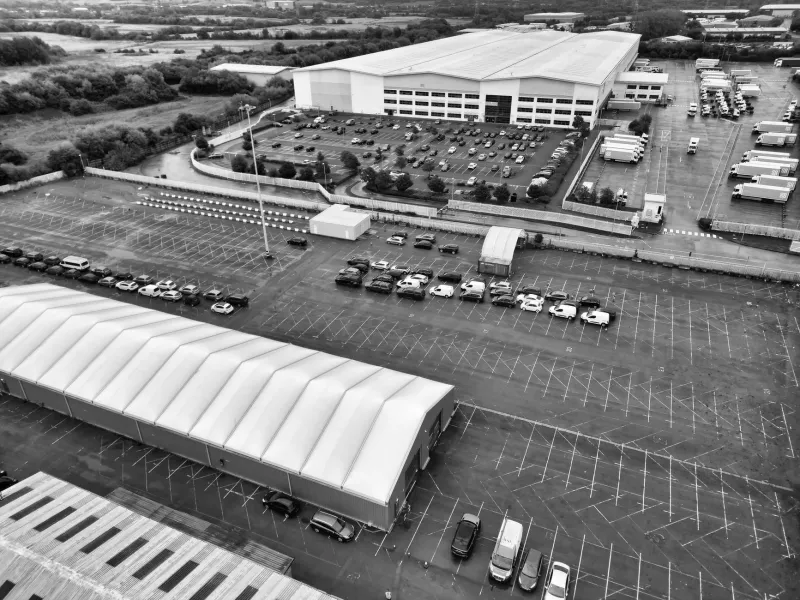
Dedicated storage facilities operate with security infrastructure that most residential properties simply can't replicate: perimeter fencing, controlled access, surveillance systems, and on-site management. For a collector who's spent years building a collection, that level of protection isn't a luxury — it's appropriate risk management.
Homeowner's insurance also tends to have limitations when it comes to high-value collectibles stored on the property. Off-site storage opens up different insurance options that are better calibrated to the actual value of what's being protected. That's a conversation worth having with your insurance provider before you need it.
Separating the Passion From the Property
The collectors who make this move consistently describe it the same way: it stopped feeling like a compromise and started feeling like a choice they made for the hobby, not against it.
Your home is your home. Your collection deserves its own space — one that's set up for it, secured for it, and scaled to it. Those are two different things, and treating them that way makes both better.
At Big Country Parking & Storage, we've seen what happens when a collector finally gets the space they actually need. The projects move faster. The pieces look better. And the household breathes a little easier. If your collection has outgrown your garage — or your garage's patience — it might be time to give it a proper home.