What the Elements Are Quietly Doing to Your Vehicle's Value Right Now
Most people think about depreciation in terms of miles driven or years on the road. What they don't think about — at least not until they're staring at a lowball offer at trade-in time — is what simply sitting outside does to a vehicle over months and years.
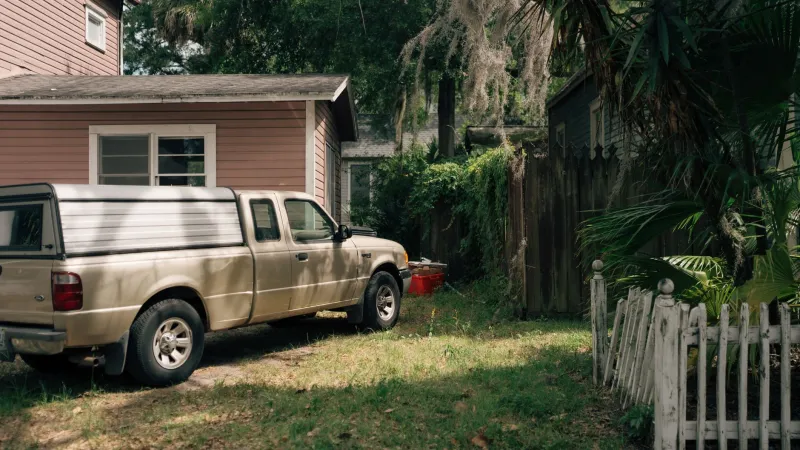
Weather doesn't care how little you drove it. UV rays don't take a day off because your truck hasn't moved in a week. And oxidation? It's patient. It'll work on your paint, your trim, your rubber seals, and your undercarriage whether your vehicle is running every day or collecting dust between seasons.
The uncomfortable truth is that a lot of vehicle owners are quietly bleeding asset value without realizing it — and the culprit isn't wear and tear in the traditional sense. It's storage. Or more specifically, the lack of proper storage.
The Sun Is Not Your Vehicle's Friend
Let's start with UV damage, because it's the most visible and one of the most underestimated forms of deterioration.
Extended exposure to direct sunlight breaks down clear coat and paint at the molecular level. What starts as a subtle fade becomes oxidation — that chalky, dull look that no amount of waxing fully reverses. On a classic car or a well-maintained truck, UV damage can knock thousands of dollars off a private-sale price almost overnight once a buyer spots it.
Interiors take a hit too. Dashboards crack. Leather dries out and splits. Vinyl fades. Carpet bleaches along the edges where sunlight streams through the windows. These aren't cosmetic-only issues either — a cracked dash or deteriorated interior signals to any serious buyer that the vehicle wasn't cared for, and they'll negotiate accordingly.
A carport helps. A good cover helps more. But neither compares to enclosed, shaded storage when it comes to protecting a vehicle's finish and interior over the long haul.
Temperature Swings Do Damage You Can't Always See
Here's something that doesn't get talked about enough: the damage caused by repeated heating and cooling cycles.
When a vehicle sits outside through a Texas summer or a Montana winter — or worse, somewhere that gets both extremes — the materials inside are constantly expanding and contracting. Seals dry out and crack. Rubber hoses become brittle. Battery performance degrades faster. Fluids break down more quickly. Tires develop flat spots from sitting in the cold.
None of this shows up obviously on a vehicle's exterior, which is part of what makes it so costly. A buyer doing a visual inspection might not catch any of it — but a mechanic will. And when they do, you're either making repairs before the sale or taking a hit on price.
Climate-controlled storage keeps temperatures stable. That single factor alone can dramatically extend the life of seals, hoses, tires, and batteries — all components that are expensive to replace and that buyers specifically look at when assessing a vehicle's condition.
The Case of the Classic That Lost $14,000 in Two Winters
Talk to anyone who deals in classic cars and they'll have a story like this one.
A guy in rural Kansas inherited a 1969 Chevelle from his father — clean car, original paint, documented history. He kept it in his barn for two winters, figuring a barn was good enough. It wasn't insulated, so temperatures dropped well below freezing. The roof had a small leak he didn't notice until spring. By the time he had the car appraised with the intention of selling, the combination of moisture damage to the trunk floor, cracked weatherstripping, and rust beginning to form along the rear quarters had dropped the car's value by roughly $14,000 compared to what a comparable, properly stored example was selling for at auction.
Two winters. A barn he already owned. And a loss that would have more than paid for years of professional enclosed storage.
This isn't a rare story. It's a common one, told in different variations across the country, involving classic cars, lifted trucks, vintage motorcycles, and recreational vehicles.
RVs and Boats: The Depreciation Multiplier
For larger recreational vehicles, improper storage doesn't just affect cosmetics — it creates structural problems that compound fast.
An RV stored outside through several seasons of sun and rain is going to develop roof seal issues. Once moisture gets into the roof membrane, it travels. Delamination starts. Walls bubble. Flooring softens. What looked like a solid rig on the outside turns into a gut-renovation project on the inside. RV buyers are savvy about this — they'll probe every corner with their hands looking for soft spots, and a single soft wall can collapse a deal entirely.
Boats stored in standing water or on uneven ground develop hull stress cracks and gel coat damage. Canvas and upholstery mold. Outboard motors corrode. A boat that would have sold for $28,000 in solid shape might struggle to move at $19,000 after a couple of seasons of outdoor neglect.
Proper covered or enclosed storage, with the vehicle properly prepared for the off-season, preserves these assets in a way that pays real dividends at resale.
Running the Numbers: When Storage Pays for Itself
Here's where a lot of vehicle owners do the math wrong. They look at the monthly cost of professional storage and think, "That's money I'm spending." What they don't account for is the money they're not losing.
Let's say you're storing a truck worth $35,000. Two years of outdoor storage in a variable climate causes enough paint fade, seal deterioration, and minor rust to reduce the resale value by $4,500. Two years of professional enclosed storage at a reasonable monthly rate? Maybe $1,800 to $2,400 total, depending on the facility and region.
The math isn't complicated. You spent less, and you preserved more. The storage didn't cost you money — it saved you money.
For classic cars and specialty vehicles where condition is everything, the math is even more dramatic. A concours-quality classic can lose a significant percentage of its value from a single visible blemish in the paint. Proper storage isn't overhead — it's asset protection.
What to Actually Look for in a Storage Facility
Not all storage is created equal, and the goal here isn't just getting a vehicle under a roof. Here's what actually matters:
- Enclosed, covered bays that block UV exposure and precipitation
- Climate control or at minimum temperature stabilization to prevent freeze-thaw damage
- Security — cameras, gated access, lighting — because a stored vehicle is still a target
- Clean, dry surfaces that won't trap moisture under your vehicle
- Accessibility that lets you check on your vehicle or retrieve it when needed
A facility that takes storage seriously will have thought through all of these things. One that's just renting you a patch of gravel probably hasn't.
The Bottom Line
Vehicles are assets. Some of them are significant ones — a restored classic, a work truck, an RV that represents years of savings. Treating storage as an afterthought is treating those assets carelessly, and the market will eventually reflect that.
The elements aren't dramatic. They're slow. But they're consistent, and over a season or two, they do real, measurable damage that shows up in appraisals, trade-in offers, and private-sale negotiations.
Professional storage isn't a luxury for people with too much money. For a lot of vehicle owners, it's simply the smarter financial decision — one that pays for itself before you ever put the vehicle back on the road.